Blog
Podcast SEO 101: How Search Actually Sees Your Show
Published 17/05/2026 by Rane
PodcastingYou've got a podcast and you're building an audience. The numbers are okay, maybe even good, and you feel like you're getting the hang of things.
But now you're hearing about this thing called "podcast SEO", and every article you see has been either a wall of jargon or a 12-step checklist written for someone launching their first show next Tuesday.
Here's the thing nobody quite says out loud: podcast SEO (or Podcast Search Engine Optimisation) isn't really a separate skill. It's one idea, applied in a few places. Once the idea clicks, the tactics are obvious, and most of them take about ten minutes per episode.
This is a guide for someone who already has a podcast and wants to understand how search actually works, without becoming an SEO person in the process.
One thing you need to know:
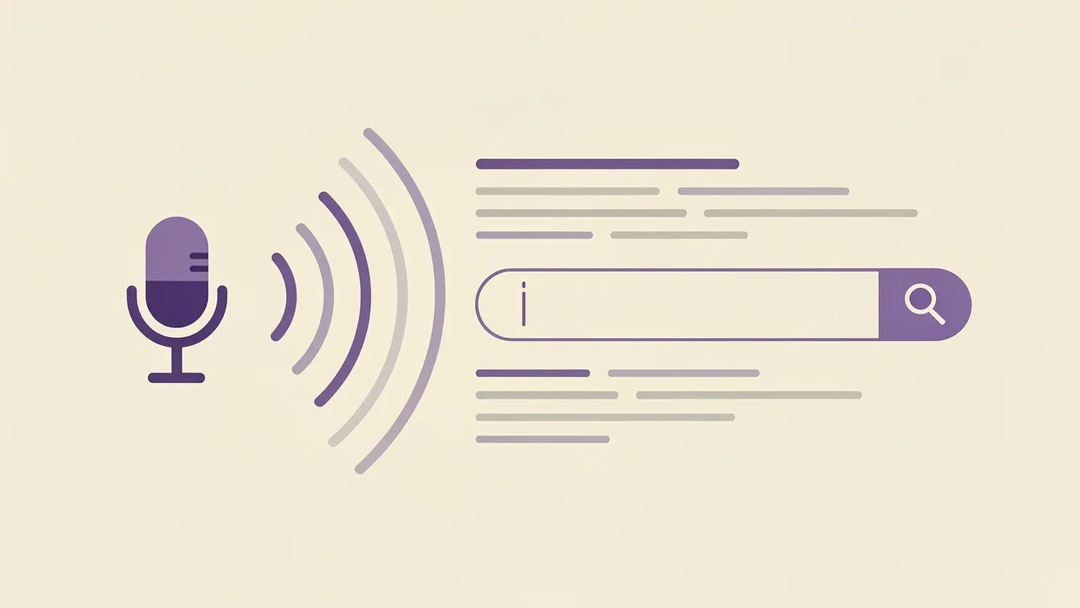
Search engines can't hear your podcast.
That's it. That's the whole deal.
Google isn't sitting there listening to your episodes. Neither is Apple, and neither (mostly) is Spotify. They're all reading whatever text exists about your episode. The title. The description. The show notes. The transcript, if there is one. That's the surface area they can see. Everything else is, to them, a black box of audio they can't make sense of.
So the entire game of podcast SEO reduces to two questions: what text exists about your show, and is it the text people are actually searching for?
That's the idea. The rest of this article is just applying it.
If you internalise that one frame, you can derive most of the advice in any podcast SEO article yourself, and you can also tell when an article is wasting your time. ("Use rich, keyword-dense metadata to maximise topical authority" is just "write decent show notes" wearing a suit.)
The three places people search
Before getting into what to actually do, it helps to know where people are searching, because the three big surfaces work differently and most articles smoosh them together into one undifferentiated blob.
There are basically three:
Apple Podcasts. Search inside the Apple Podcasts app. It leans heavily on your show title and your main show description. Episode-level discovery is weaker here, which means the words in your show name and the top of your show description are doing most of the work. If your show is called "The Thursday Chat" and the description is two sentences about how you and your co-host love a good yarn, Apple has almost nothing to go on.
Spotify. Also in-app search, but Spotify indexes transcripts. That changes things. On Spotify, individual episodes are genuinely findable, which means transcripts are pulling real weight rather than just being a nice-to-have. (Worth double-checking the current state of this when you sit down to write, because Spotify changes things often, but as of the last year or so this has been true.)
Google. Web search. This is where the show notes page on your own website earns its keep, and increasingly where AI Overviews and ChatGPT-style answers pull from. If your podcast only lives on Apple and Spotify, with no proper website behind it, you're more or less invisible to web search. Your hosting platform's auto-generated episode pages count for something, but a real web site with real show notes counts for considerably more.
The useful takeaway here: you don't have to do everything everywhere. If your audience finds you mostly through Apple, the show title and description are where you want to put the most thought. If most of your traffic comes from people Googling topics you cover, the show notes pages on your website matter more than anything else. Knowing which surface matters for your show stops you spreading yourself thin across all three.
Four things you should probably do
Four things. Each one explained so you know why it's on the list, not just that it is.
- Episode titles that say what the episode is about.
"Episode 47: My chat with Sarah" tells a search engine nothing. "How Sarah built a six-figure consulting business from her kitchen table" tells it almost everything it needs to know.
The trick is to think about what your ideal listener would actually type into a search bar. Not what the episode is called in your own head, but what problem or question would lead someone to it. That's "search intent", which is a slightly fancy term for matching your title to the words people are actually searching, rather than the words you'd naturally use to describe the episode at a dinner party.
You don't need to stuff keywords and don't try to be too click-baity. You just need to be clear. Episode titles that read like blog post headlines tend to do well: "How to...", "Why...", "What I learned about...", "The case for...". You can keep the guest's name in there, you can keep your show's personality, but the title should answer the question "what is this episode about" in a way that uses the words a stranger would use.
- A real show notes page on your own website.
Two or three paragraphs minimum. Not a one-liner. Not just the episode title repeated with a play button underneath.
This is the page Google can rank. If your podcast lives entirely on Apple and Spotify, with no website of its own, you've handed your entire web search presence to platforms that don't really want to send traffic to you. A simple website with a proper page per episode, even a barebones one, changes that. The page can be short. It just has to exist and be readable.
If you're not sure what to put in it: a couple of paragraphs describing what's actually in the episode, a few key points or quotes, links to anything mentioned, a bit about the guest. It doesn't have to be a literary work. It just has to give Google something to read.
- Transcripts, but pragmatically.
Yes, transcripts help. No, you don't have to sit down and transcribe two years of back catalogue tonight.
Start with new episodes. Use an auto-transcription tool (there are about forty of them now, most of them fine). Don't worry about getting it perfect. The difference between "no transcript" and "decent auto-transcript" is enormous. The difference between "decent auto-transcript" and "lovingly hand-edited transcript" is real but small. If you're going to spend time editing, edit the show notes instead. Those get read by humans; the transcript mostly gets read by machines, and the machines are forgiving.
Put the transcript on your show notes page, or link to it from there. Either works.
- Short clips for social, kind of.
This one's a bit of a cheat because it's not really SEO. But it's worth mentioning because the discovery story has shifted in the last couple of years, and pretending otherwise would be a disservice. Also, I know of a great website that can help with this (just saying)
A lot of new listeners now find podcasts through short clips on TikTok, Instagram, YouTube Shorts, and increasingly LinkedIn. That's search-adjacent rather than search itself (people search inside those platforms, and the platforms' algorithms surface clips based on watch behaviour), but the underlying principle is the same: you're creating findable text and metadata around your audio. The clip's caption, the title on the YouTube Short, the hashtags. It all counts as text about your show, in places where text about your show can be found.
You don't have to do this. The first three items will move the needle even if you never post a clip. But if you're already doing social, knowing that it's part of the same broader discoverability story (rather than a separate marketing chore) might make it feel less like another plate to spin.
What's changing (just quikly)
You can't read anything about search in 2026 without someone telling you AI is changing everything. Mostly that's overblown. But there is one shift worth knowing about, because it changes how the work you're already doing pays off.
Increasingly, people aren't searching Google and clicking blue links. They're asking ChatGPT, or Claude, or Google's AI Overview, and getting a synthesised answer back. Someone asking "what's a good podcast about sustainable fashion" used to get a list of links. Now they often get a paragraph naming three or four shows.
The interesting bit, from a podcaster's perspective, is that the AI is reading the same surfaces as a regular search engine. It's reading show descriptions, show notes, transcripts, articles that mention your show. It's just synthesising rather than ranking. Which means the work in the previous section, the clear titles and the real show notes and the transcripts, isn't suddenly obsolete. It's doing double duty now: showing up in old-style search, and feeding the AI answers that are slowly replacing it.
The thing AI answers care about, even more than keywords, is whether your show actually fits the question being asked. Which loops back to that "search intent" idea: a clear, honest description of who your show is for and what it covers will get picked up by an AI summariser much more reliably than something vague and clever. "A show about creativity and life" is harder for an AI to confidently recommend than "interviews with working illustrators about how they actually make a living."
You don't have to do anything different for AI search. You just have to do the regular things slightly better, and be a bit clearer about what your show is.
Hey Rane, so where should I start?
Just pick one thing.
If I had to choose one, it'd be the episode titles. Highest leverage, lowest effort, and you'll feel the difference within a month or two as new episodes start picking up search traffic the old ones didn't. Going back and renaming old episodes is optional, and probably worth it for your ten or twenty best ones, but new episodes are where to focus first.
If your titles are already good, the show notes pages are next. If those are already good, transcripts. If all three are sorted, you're already doing more than most podcasters and you can stop reading articles like this one.
The thing to resist is treating any of this as a project. It's not. It's a small adjustment to how you publish each episode, applied consistently over time. The first one will feel a bit clunky. The tenth one will be automatic. By the fiftieth you'll wonder how you ever published episodes without thinking about it.
You don't have to become an SEO person. You just have to make your podcast legible to the systems that can't hear it. Which, when you put it like that, is a pretty small ask for something that quietly compounds every week you keep showing up.
Start creating for free
Turn audio into video, transcriptions and social content in minutes
Try it today